Roofing
The 30-minute window after a hailstorm decides who roofs the house
Storm chasers are aggressive and fast. Locals are trustworthy but slow. The roofer who's both wins. Here's how the math works.
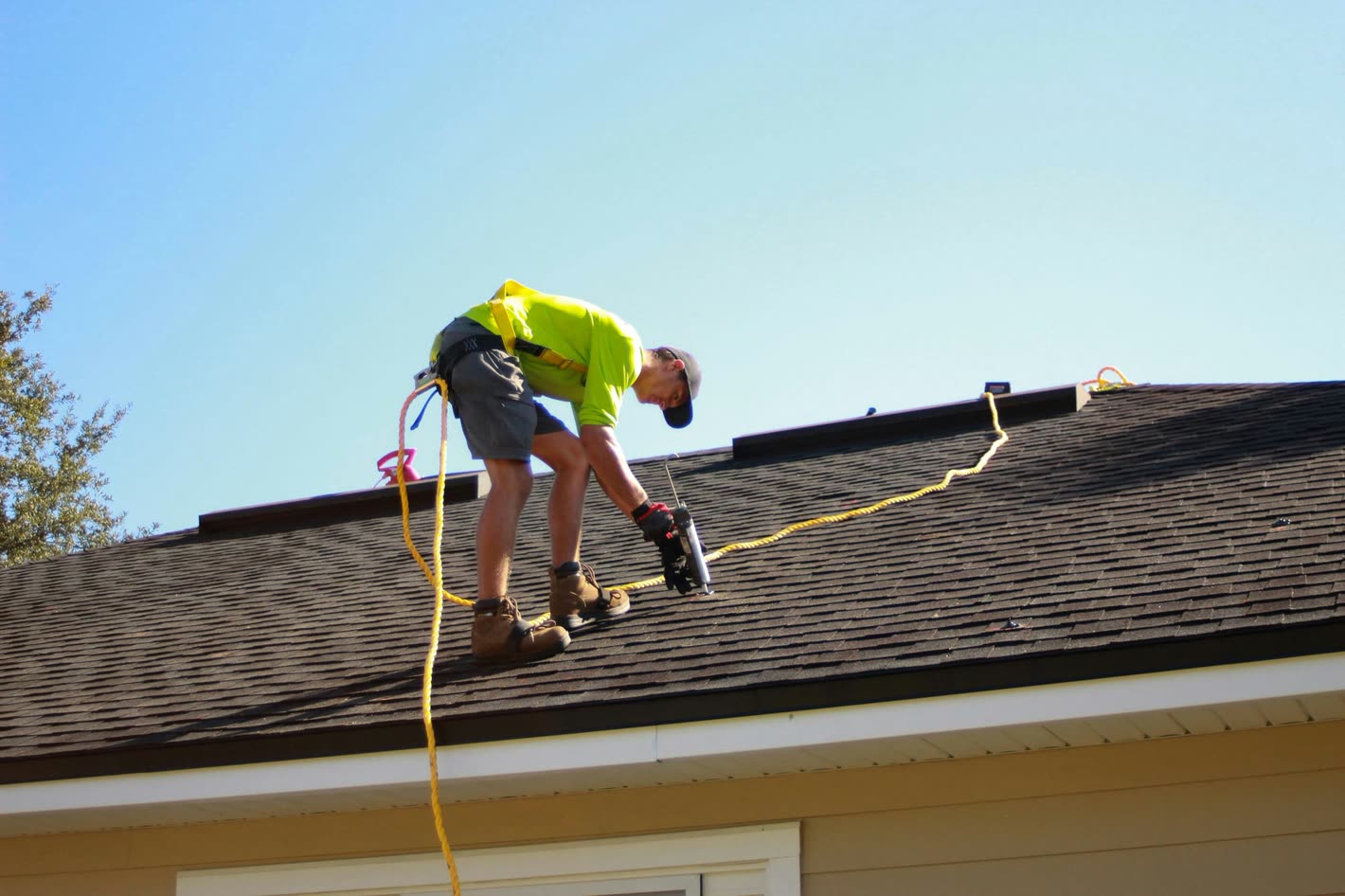
It's 7:42am the morning after a hailstorm rolled through. A homeowner walks out into the driveway in slippers and finds the yard speckled with what looks like coarse black sand. Asphalt granules. The gutters are full of them. There's a dent the size of a quarter on the hood of the SUV. The mailbox post is leaning.
She pulls out her phone, opens Google, and types "roofers near me." She doesn't know what a free inspection costs, what an insurance claim looks like, or whether her roof is actually damaged or just shedding. She just wants somebody to come look at it before something leaks.
The first listing she taps rings four times and goes to voicemail. The second is a 1-800 number with an out-of-state area code that picks up on the first ring. Friendly guy. Says he can have an "inspector" at the house in two hours. The third is a local roofer with twenty years of reviews. She leaves a message. Nobody calls her back until 2pm.
Guess who climbs on her roof first.
The window is shorter than most roofers think
The hours after a hail or wind event are unlike any other moment in a roofer's year. Three things happen at once:
- Homeowners go from zero intent to high intent overnight. They weren't shopping yesterday. Today they're refreshing their phones.
- Storm chasers descend. Out-of-area crews in white pickups, door-knocking by 9am, calling every number that posts a hail-damage Facebook complaint, working the neighborhood hard.
- Local roofers, who actually live here and have the right insurance and the right reputation, are buried. Their phones are ringing nonstop. Their voicemail is full. Their estimator is on a roof.
The customer who searches at 7am and doesn't hear back from a local by 7:30am is on a storm chaser's calendar by 9am. The local trust advantage doesn't help if the local never picks up.
Why "we'll get back to you within 24 hours" loses
Here's what most local roofers don't fully internalize. The first call back doesn't just have a higher chance of booking. It often books the job before the second call back even happens.
A homeowner who's been told by a confident-sounding stranger at 9am that an inspector is coming at 11am has, in their mind, handled the problem. By the time the local roofer calls at 4pm, the inspection has happened, a contract has been signed on a clipboard in the driveway, and the homeowner is mildly embarrassed to say so.
We've looked at lead-response data across roofing operations after named storm events. The pattern shows up every time:
- The first roofer to respond books somewhere between 50 and 70 percent of the leads they reach. Speed dominates everything else.
- Response times longer than an hour drop conversion roughly in half. Past four hours, you're often calling a homeowner who's already on someone else's schedule.
- In the 48 hours after a major storm, a local shop's call volume can spike 5x to 10x. Most are not staffed for it. Most never recover the leads they miss in that first day.
The leads are arriving. They're just landing in voicemail and getting picked up by people who happen to be answering their phones.
The qualifying problem
Speed alone isn't enough. Storm chasers are fast. They're also, to put it gently, not always who you'd want on your roof. The local roofer's real edge is being both fast and the kind of operation a homeowner actually wants. That edge only matters if the first conversation also does the work of qualifying the lead.
A good first call, from the homeowner's side, sounds like a calm professional asking the right questions in the right order:
- How old is the roof and what's the material.
- Have they filed an insurance claim yet, and if so, where in the process.
- Is the roof safely accessible, two-story versus single, steep versus walkable.
- Are there any visible leaks or interior damage already.
- What's the address, and can we get an inspector there in the next 24 hours.
That conversation, done well, sorts the genuine claim from the curious neighbor, the ready-to-book from the just-got-quoted, and the solid lead from the one that's going to ghost. It also gets the inspection scheduled before the homeowner has time to take three more calls.
What "fast and trusted" actually looks like
The roofer who wins a storm season isn't the one with the biggest ad budget. It's the one whose phone gets answered every time, by someone calm who asks the right questions and books the inspection on the call.
That's the part that's hard to staff for in a 5x volume spike. It's also the part where AI has gotten genuinely good. A system that picks up on the first ring, qualifies the lead in under two minutes, books the inspection directly into the dispatch calendar, and texts the homeowner a confirmation with the inspector's name and ETA, that system beats both the storm chaser and the slower local. Local trust plus storm-chaser speed.
The takeaway
Storm leads aren't won by being the best roofer in town. They're won by being the first roofer the homeowner actually talks to, and by being someone they trust by the end of that conversation. Both, not either.
If your phone is going to voicemail during the busiest 48 hours of your year, the fix isn't more ads. It's making sure the next call gets picked up, qualified, and booked, every time.
That's the part Nephew handles, end to end.